


Many mothers wean their children after the age of two and are met with a surprise. You’d think the child is older and understands everything, but suddenly… they start sucking their thumb, chewing on their shirt collars, or - most painfully - biting your shoulder.
I experienced this firsthand. My daughter was breastfed until she was 2 years and 3 months old, and throughout that entire time, we never had an issue with biting. But as soon as we finished that stage, the “searching” began: teeth and fingers were everywhere.
As a doctor and a mom, I decided to look deeper: what is actually happening in a child’s head (and mouth)?
The Breast as a “Brain Gym”
We usually view breastfeeding as nutrition or bonding. But from a neurophysiological perspective, it’s an intense workout. To get milk, a child engages over 20 muscles in the face and jaw. This provides the brain with a massive influx of “sensory feedback” (proprioception).
When breastfeeding ends, this major information channel suddenly shuts down. The child’s brain, used to daily “strength training,” begins to starve.
The result: The child looks for a way to get those sensations on their own. Biting and thumb-sucking aren’t regressions in development; they are attempts at self-regulation.
The Sensory Homunculus: Why the Mouth Matters
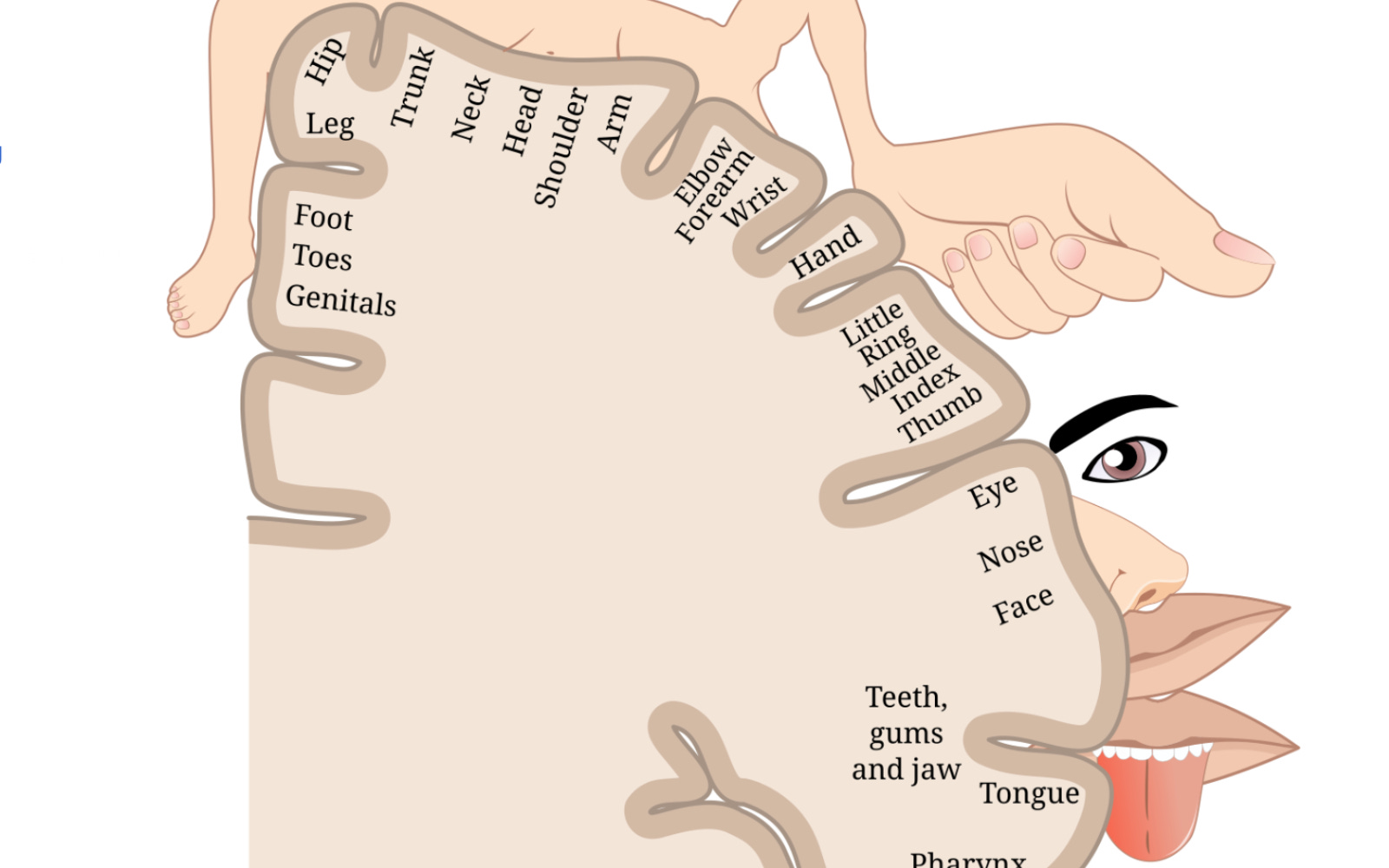
In our brain, there is a map (the sensory homunculus) where different body parts are represented. The mouth takes up a huge area on this map. It is the “highway” for calming the nervous system. If this zone doesn’t get a workout, the child becomes anxious and starts “itching” their jaws on everything around them.
How to Help Your Child (and Yourself)
We need to give the brain the same sensations it got from breastfeeding, but through “grown-up” methods. Here are some games to improve tongue coordination and satisfy that sensory hunger:
Breathing Games (Resistance)
The Smoothie Trick: Drink thick smoothies through a very thin straw. This mimics the effort of nursing.
Storm in a Glass: Blow through a straw into water to create bubbles.
Blow out Candles: Or play “cotton ball soccer” on the table - blow to score a goal.
Tongue Games (Coordination)
The “Painter”: Lick lips in a circle or try to touch the nose and chin with the tongue.
Hide and Seek: Push the tongue against the inside of the cheek, and let mom “catch” the bump with her finger from the outside.
Cheek Work
The “Hamster”: Puff out cheeks one at a time, rolling air from one side to the other. This strengthens the muscles that used to work during suction.
The Bottom Line
If your child starts biting after weaning, don’t rush to punish them. Try to feed them… with sensations. Give the jaw a job, turn it into a game, and you will see the urge to bite naturally fade away.
And in the meantime, my coffee stays hot. Tested and approved! ☕️
I’d love to hear from you!
Did you notice any changes in your child’s sensory habits after weaning? Did they start sucking their thumb, chewing on toys, or maybe biting more often?
Please share your stories in the comments below! Your experiences can help other mothers realize they aren’t alone in this search for “sensory balance.” Let’s start a conversation!