

Why we need an honest conversation about nutrition and the freedom of breastfeeding
Recently, a very personal discussion unfolded in the Nest Wellness community. Beth Bollinger shared how modern mothers are still encountering absurd advice - like being told to eat Oreo cookies to boost milk supply - straight from medical staff.
Reading through those comments, I saw reflections of the thousands of women I’ve encountered in my practice. Some fought pressure in the hospital, others defended their right to long-term nursing for years, and others were simply trying to find out: “Can I have a cup of coffee just to make it through the day?”
To be honest: I fell into those same traps myself
Despite my medical background, when I became a mother, I faced the same pressure and the same “gaps” I am writing about now. It turns out that six years of medical school prepare us to treat diseases, but offer almost no tools to help a mother maintain her confidence during those first postpartum weeks. I had to pursue separate certifications as a lactation consultant and use my own experience (including nursing my daughter for 2 years and 3 months) to figure out where evidence-based medicine ends and outdated myths begin.
This discussion prompted me to bring it all together. Today, I want to talk about nutrition for nursing mothers - not through the lens of “restrictions,” but through the lens of freedom, health, and most importantly, shaping your child’s palate for years to come.
Why the “nursing diet” is a myth that prevents your child from loving vegetables
When I was at medical school, we spent countless hours on pharmacology. But do you know what received almost zero attention? The actual nutrition of a breastfeeding woman. As a result, many doctors’ offices are still haunted by ghosts of the past: “buckwheat and turkey only” diets, bans on anything colorful, and liters of tea with milk for “better supply.”
Today, as a pediatrician and a breastfeeding consultant, I want to talk about why it’s time to leave these restrictions behind - for your sake and your baby’s.
You are programming a future gourmet
Your milk is your baby’s first school of taste. Flavor compounds from the food you eat reach your milk within 1 to 3 hours. If your diet is diverse - including spices, bitter vegetables, various proteins, and healthy fats - you are pre-introducing your baby to these flavors.
Research shows that babies whose mothers ate a wide variety of foods are much more willing to try new things when starting solids. They are already familiar with this “molecular menu.”
Hydration: Listen, don’t “force-fill”
A very popular myth is that you must drink 5 liters of fluid to produce enough milk. This isn’t true. Lactation depends on breast stimulation (demand), not the volume of liquid you force down.
However, staying hydrated is critical for your own health:
Preventing Mastitis: Dehydration can make milk more viscous (thicker), which, combined with tissue swelling, can trigger clogs or mastitis.
Recovery: Breastfeeding is energy-intensive. Drink according to your thirst. Place a glass of water everywhere you usually nurse.
Recovery: Nutrition for two
Instead of hunting for “allergens” in every apple, focus on what gives you strength:
Quality proteins and fats: These are essential for tissue repair and hormonal balance.
Complex carbohydrates: This is your energy source, and you need a lot of it right now.
Micronutrient-rich foods: Your body is working overtime. Deficiencies in iron, calcium, or B vitamins are the last thing you need during this period.
On a personal note: Coffee and common sense
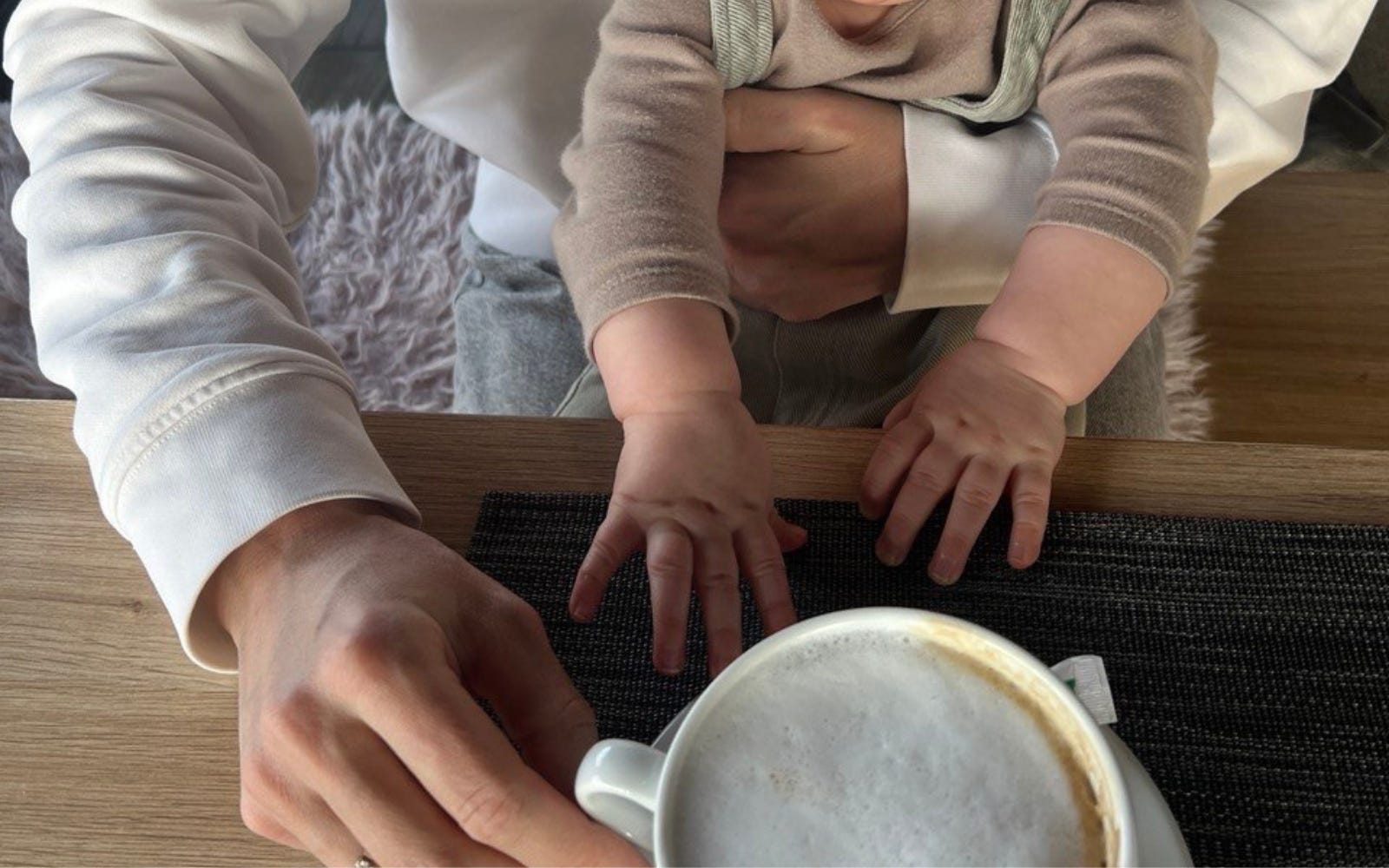
I really love coffee. I drank it throughout my pregnancy and during the entire 2 years and 3 months that I breastfed. And you know what? My daughter loves coffee too! (Apparently, she’s been getting acquainted with it from the very start 🤣).
Of course, we keep it in moderation, but this is a perfect example: breastfeeding is not a prison or a list of “don’ts.” It is a continuation of your normal, healthy, and delicious life. If a mother is happy and has enjoyed her cup of latte, the baby benefits far more than from a mother on a “sterile” and stressful diet.
The bottom line
Your diet is not a risk; it is an investment. An investment in your child’s health, their future appetite, and - most importantly - in your own physical and mental recovery.
Did you restrict yourself from certain foods or coffee while breastfeeding? What’s the strangest advice you’ve ever received? Let’s discuss in the comments!