

Parents often have just as many questions about how to start solids as when to start.
Purées or finger foods? Traditional spoon-feeding or baby-led weaning? Can you combine both? And how do you know if your baby is truly ready?
In this article, I’ve gathered four of the most common questions I hear — and answered them as clearly and honestly as I can, both as a mom of three and as a baby feeding consultant.
1. What’s Better: Traditional Spoon-Feeding or Baby-Led Weaning (BLW)?
Both traditional spoon-feeding and baby-led weaning (BLW) are safe and valid approaches — as long as you follow your baby’s cues and basic safety guidelines.
The traditional method usually starts with smooth purées offered by an adult with a spoon. It can work well for parents who prefer structure, more control over portions, and less mess.
BLW (baby-led weaning) encourages offering soft, safe finger foods from the start, letting your baby feed themselves. It’s a great path to independence, but it requires patience — and a tolerance for a bit of chaos.
Keep in mind: neither approach is a magic solution. There’s no “perfect” method, and each baby has their own rhythm and personality.
2. Is It Dangerous to Offer Finger Foods? What If My Baby Chokes?
This is one of the most common and understandable fears — and I’ve been there too.
It’s important to know the difference between:
Gagging — a natural, protective reflex as your baby learns to manage food in their mouth;
Choking — a serious situation where the airway is blocked and immediate help is needed.
To reduce the risk:
– Start with soft, safe foods that are easy to grasp and mash, like cooked sweet potato, ripe banana, or avocado. Long stick-shaped pieces work well for tiny hands.
– Always stay close during meals. Avoid distractions like cartoons, and don’t feed your baby while they’re reclined.
– If you’re unsure or nervous, take a basic infant first aid course. Knowing what to do can give you confidence and peace of mind.
3. Can You Combine BLW and Purees?
Yes, absolutely! And it can make the process more flexible and easier for both you and your baby.
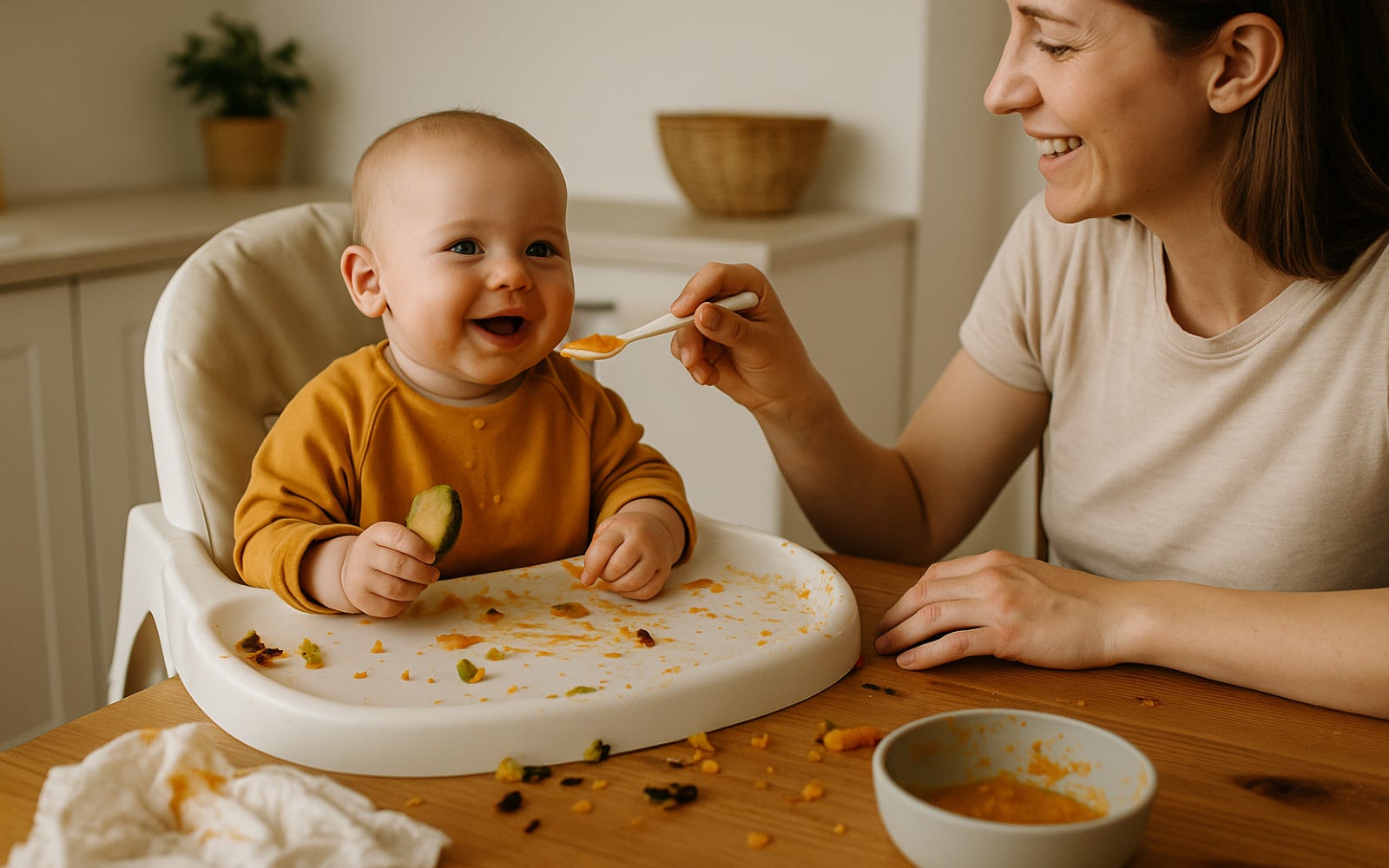
Personally, I found that a combined approach worked best: some foods offered on a spoon, others as soft finger foods. This way:
– your baby gets to explore different textures
– it takes some pressure off the parents
– it supports sensory development and self-feeding skills
Over time, your baby will likely show you what they prefer — and you can adjust to their pace.
4. How Do You Know Your Baby Is Ready to Chew?
Even without teeth, babies can chew — their gums are stronger than you might think!
Here are some signs your baby might be ready to try soft finger foods:
– They can sit up steadily with support
– They have good hand control
– They can hold food and bring it to their mouth
– They show interest in your food and open their mouth
– They don’t automatically push food out with their tongue
Start simple — offer soft, easy-to-mash foods in safe shapes. And remember: the gag reflex isn’t something to fear — it’s a normal part of learning how to eat.
Final Thoughts
There’s no one “right” way to start solids.
What truly matters is you and your baby — your rhythm, your comfort, your connection.
Try, observe, trust yourself. Starting solids isn’t a test — it’s a journey of discovery, together.
A Gentle Reminder
This article was created with care — based on personal experience, professional knowledge, and up-to-date guidance.
But it’s not a substitute for an individual consultation with your pediatrician or feeding specialist, especially if your baby has developmental differences, feeding challenges, or safety concerns.
Trust yourself and your baby — and don’t hesitate to seek support if you feel you need it.
What approach did you choose — or are you choosing right now?
Feel free to share in the comments — your story might be just the encouragement another parent needs.
Next in the Series:
We’ll talk about how to build a feeding routine, how often and how much to offer, and how to tell when your baby is full.
Subscribe so you don’t miss it!
We started with a combined approach with our now 9 month baby. Though after a month of weaning we switched to solely baby led as they clearly preferred feeding themselves! I agree it's best to follow your baby's cues.