

Many parents view sleep as a kind of light switch: flip it, and the child turns off. But physiologically, falling asleep is not an instantaneous action; it is more like “landing a heavy aircraft.” If you start the descent too late - when the fuel is already empty - or try to do it too abruptly, a “crash landing” in the form of tantrums, resistance, and endless night wakings is inevitable.
As an MD with 15 years of experience and a mother of three (with number four currently “loading”), I am at the epicenter of this process every single day. I know that textbook pediatric theory often crumbles at 8 PM when the house is ruled by “organized chaos.” However, understanding which biological gears are turning inside a child during these hours allows me to manage the process by relying on biology rather than a battle of wills.
The melatonin window and the light trap
A child’s pineal gland is a hypersensitive sensor. Research from Harvard Medical School confirms that photo-receptors in a child’s retina react far more aggressively to light than those of an adult. Blue light - from phone screens, TVs, and even bright LED bulbs in the bathroom - suppresses melatonin production in children almost 90% faster than in adults.
What is the trap here? Even 30 minutes of cartoons before bed can shift the sleep phase by 1.5 to 2 hours. At that moment, the child’s brain is physically incapable of understanding that it is night. It “sees” an artificial sun and blocks sleep hormones, believing it is the middle of the day. Consequently, when you turn off the TV and demand they go to sleep, you are demanding it from an organism that is biochemically in a “midday” state.
My Approach: One hour before bed, we enter “cave mode.” We turn off overhead lights, leaving only warm nightlights in the orange or yellow spectrum. This isn’t just about atmosphere - it’s a direct signal to the hypothalamus: “Start synthesizing melatonin now.” We prepare the ground in advance rather than waiting for a miracle from closed eyes.
Sleep biochemistry: What’s on the plate?
Pre-sleep nutrition isn’t about calories; it’s about amino acids and stable blood sugar levels. As a nutrition specialist, I often see two extremes: parents either trying to feed a “heavy” meal so the child doesn’t wake up, or giving something sweet as a “treat” at the end of the day. Both are enemies of quality sleep.
The insulin rollercoaster trap: Simple carbohydrates (sugary cereals, cookies, juice) cause a sharp glucose spike. An hour or so later, blood sugar inevitably crashes. The body perceives this as a threat and releases cortisol to bring the sugar back up. The child wakes up at 2 AM in a state of stressful arousal - not because they are hungry, but due to a hormonal glitch.
Thermogenesis and heavy digestion: Meat or high-fat foods require massive energy for digestion. This process inevitably raises the core body temperature. And as we know, for deep sleep stages, we vitally need that temperature to drop.
Our experience: Previously, my youngest daughter was breastfeeding, which was the perfect natural mechanism - the composition of evening milk actually adjusts to sleep needs. Now that we have transitioned to the family table, we have our own “food anchors.” In our “chaos,” the favorites are bananas and oatmeal. Bananas are a natural cocktail of potassium, magnesium, and tryptophan (the amino acid that builds melatonin). Oatmeal is the ideal complex carbohydrate that releases energy slowly, keeping blood sugar stable until morning.
The cortisol spike: When fatigue becomes hyperactivity
You’ve likely seen it: a child who could barely drag their feet 10 minutes ago suddenly starts running in circles, laughing loudly, and jumping on the sofa. In pediatrics, this is known as hyperarousal.
f we miss the “sleep window,” the body triggers an ancient survival mechanism - pumping out cortisol and adrenaline.
The science of survival: This “second wind” is actually a stress response. The heart rate rises, body temperature increases, and the nervous system operates at its limit. Trying to tuck a child in during a cortisol spike means sentencing yourself to 2–3 hours of exhausting struggle. The child’s body at that moment believes that sleeping is dangerous and that it must “fight or flee.”
The takeaway: It is crucial to catch the “quiet window” (slowed movements, glazed eyes, a lull in play) before the hormonal “afterburners” kick in.
Thermoregulation: The magic of a warm shower
This is my favorite medical “hack” that many underestimate. The biological trigger for sleep is not the time on the clock, but the drop in core body temperature.
How it works: When a child takes a warm shower or bath, vasodilation occurs - the blood vessels in the skin expand. Heat rushes to the periphery. The moment the child steps out of the water into a cooler room, that accumulated heat escapes rapidly through the dilated vessels, and the internal temperature drops sharply. This downward temperature spike is a powerful command for the brain: “Time to enter sleep mode.” This is pure physics working in favor of parental nerves.
Co-regulation: Your pulse as the master metronome
Here we move to the most important part - the neurobiology of relationships, based on Stephen Porges’ Polyvagal Theory. A child’s nervous system is still too immature to calm down on its own. Children do not have a “self-regulation” button; it is only beginning to form. They use a process called neuroception - subconsciously scanning the adult’s state.
The system mirror: If you are nervous, rushing, constantly checking the clock, and mentally scrolling through tomorrow’s to-do list, your child reads your high heart rate, shallow breathing, and muscle tension as a direct danger signal. Their brain makes a biologically correct deduction: “If Mom/Dad is stressed, it must be unsafe. I cannot sleep; I must remain alert.”
Our “organized chaos” protocol: Shared rituals
In our family, we have long since abandoned the idea of “forcing” children to sleep. Instead, we create a context where sleep becomes the natural finale of the day.
Team toothbrushing: We turned routine hygiene into a shared ritual of slowing down. Being in the bathroom together isn’t a command (”Go wash up!”); it’s a shared space. It’s the first stage of physically gathering the whole family after the day’s scatter.
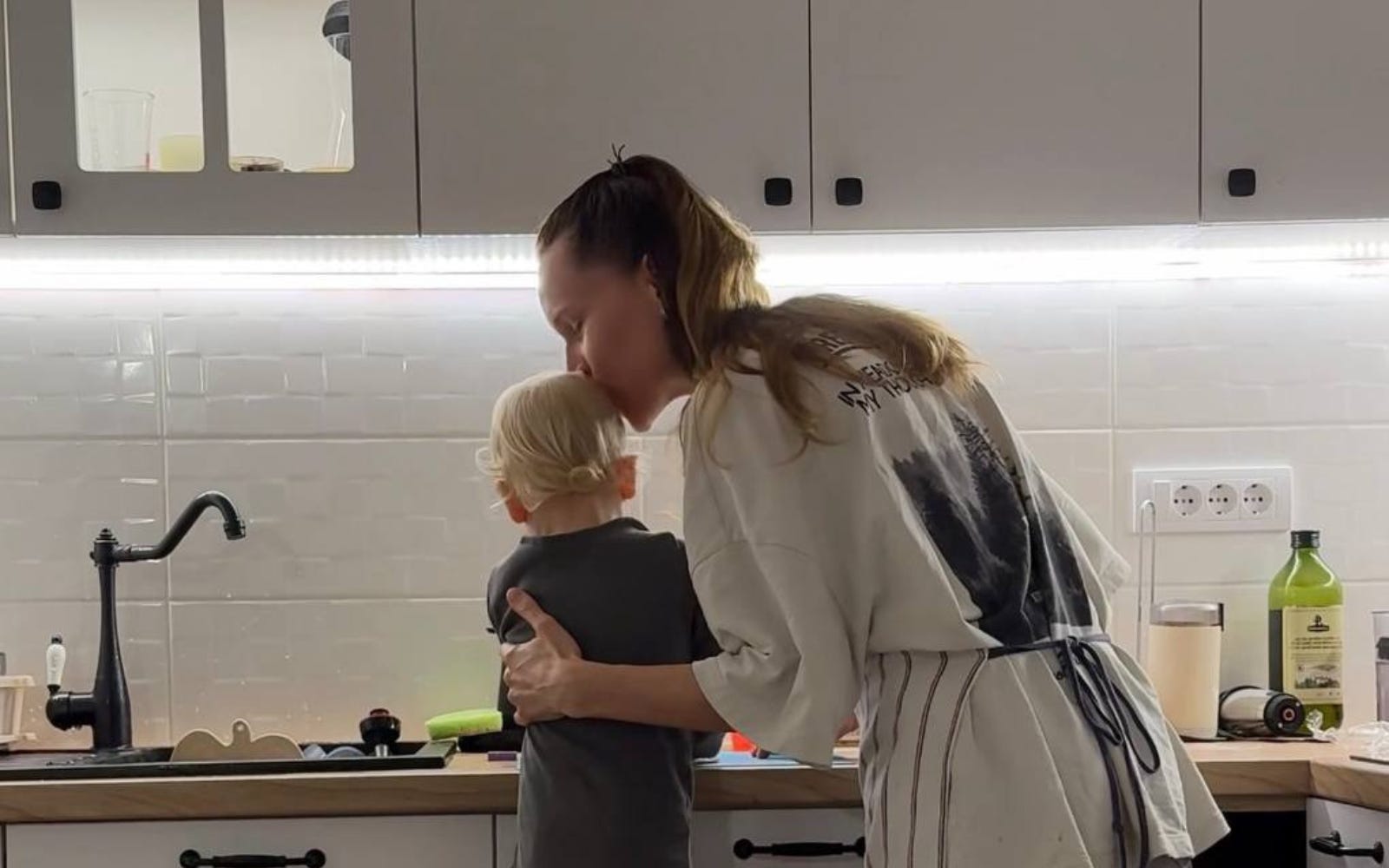
Cuddles and the “oxytocin shield”: Physical touch is the fastest way to activate the parasympathetic nervous system (the “rest and digest” mode). 5–10 minutes of firm hugging physically lowers cortisol levels in the child’s blood. The oxytocin produced is a natural antidote to daytime anxiety and overstimulation.
Simple talk in the dark: Once the lights are out, we discuss something very simple and brief. We don’t make plans for tomorrow or analyze today’s mistakes. We simply “ground” ourselves. Мой steady, rhythmic exhale in the silence becomes a physical signal for their nervous system: “No predators here. We are safe. You can let go.”
Summary
Sleep is not the absence of activity. It is an active process of brain restoration, clearing out “metabolic waste,” and structuring memory. As a doctor and as a mother, I’ve realized one vital thing: we cannot force a child to sleep. But we can tune their body’s chemistry so that sleep becomes inevitable.
When I find the strength to take that first calm “exhale” and slow down myself - my children simply follow. We cannot eliminate the chaos of a large family, but we can learn to manage its biological rhythm.
First of all kudos to you! My husband is a doctor and I always marvel at his coworkers who are mothers - it must be very demanding. This is very interesting. My son sleeps well and I feel like I do put most of these into play. My sister's children are another story she is really struggling and this post gave me the idea to check in on her bedtime routine so thank you!