

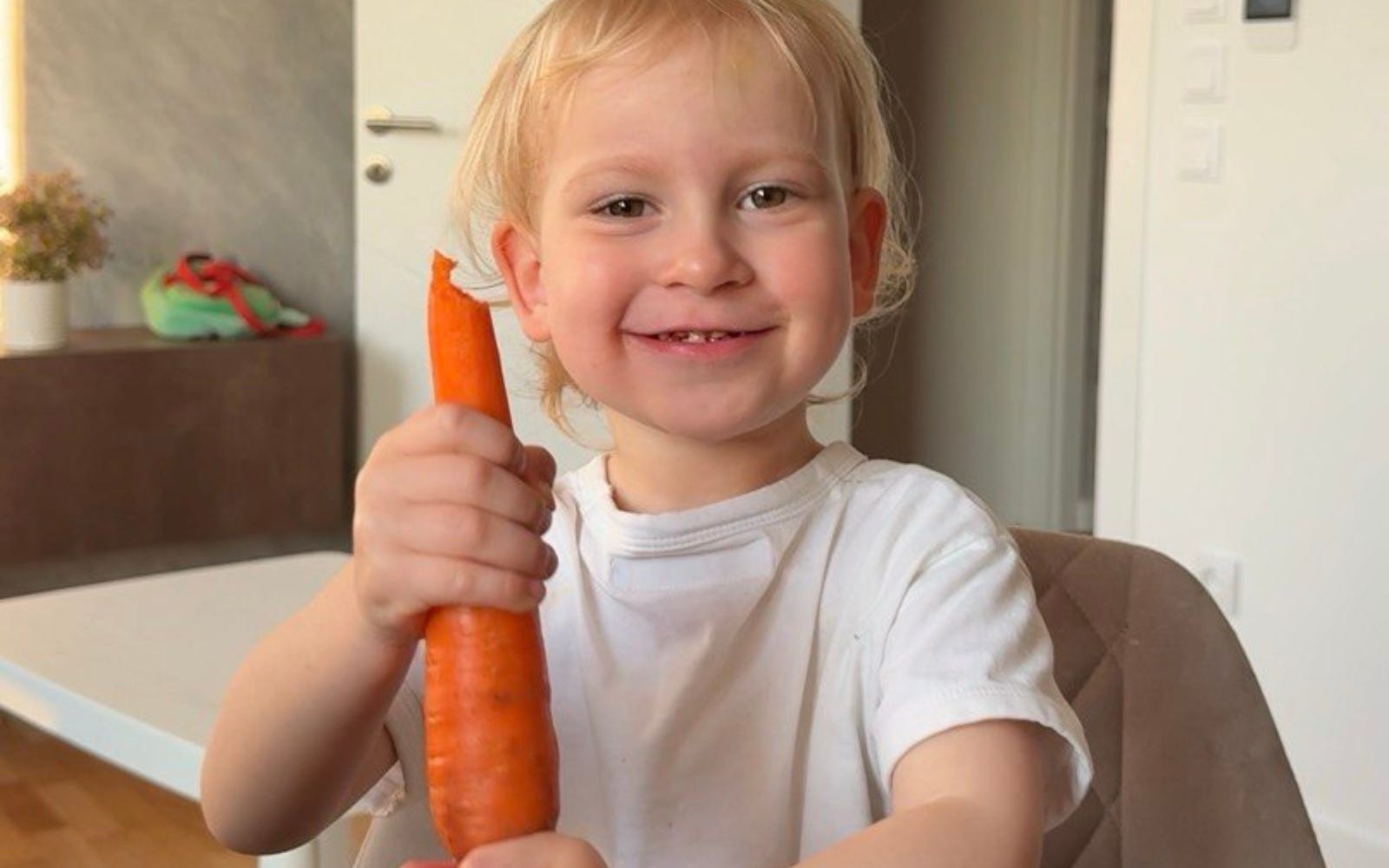
After my recent restack and discussion with fellow writers here on Substack about sensory-seeking children, a very important question came up: How do we handle habits like thumb sucking without damaging the mouth structure, and do specialized trainers really help? I decided to dedicate this article to exploring the balance between modern dental gadgets and my favorite natural approach - food.
When we see a 2-year-old with a thumb constantly in their mouth, our first instinct is to pull it out and say, “No!” But as a doctor, I urge you to ask:
“What problem is my child solving with this thumb?”
For a child’s nervous system, a thumb is the most accessible source of proprioception (deep pressure). It’s a way to ground themselves, calm down, and feel their own boundaries through their mouth. If we simply take the thumb away without offering a replacement, we leave them without a vital self-regulation tool.
However, we cannot ignore the physical impact. Prolonged thumb sucking can lead to a narrow, “high-arched” palate and an open bite. This affects not just their smile, but how they breathe, eat, and speak.
Part 1: The Rise of Myofunctional Tools (The “Gadget” Approach)
Modern myofunctional therapy often utilizes devices like the MyoMunchee - a soft silicone trainer designed for active chewing.
The Pros:
Tongue Posture: It encourages the tongue to rest on the roof of the mouth - its physiologically correct “home.”
Lip Seal: To hold the device, the child must keep their lips closed, promoting healthy nasal breathing.
Sensory Replacement: The act of chewing silicone provides an intense tactile signal that can “override” the urge to suck a thumb.
The Cons:
Sensory Aversion: Some children may dislike the texture or taste of silicone.
Lack of Flavor: Unlike food, it doesn’t stimulate saliva production or digestive enzymes as effectively.
Passive Use: If the child just holds it without actively chewing, the benefit to the muscles is minimal.
Part 2: Food Training (The “Natural” MyoMunchee)
As a pediatric specialist, I believe food is the best trainer we already have in our kitchens. We can use the mechanics of eating to correct habits and satisfy sensory needs.
Why the “Food Path” works:
Bone Growth: Chewing resistance creates pressure on the jaw bones. Under this load, the bone tissue actually expands, creating space for future permanent teeth.
Sensory Variety: The taste, temperature, and varying densities (the crunch of a carrot vs. the fiber of meat) provide the brain with far more complex information than uniform silicone.
Part 3: Adaptive “At-the-Table” Exercises
Here is a complex of exercises you can integrate into daily meals. They are designed to strengthen the jaw and replace the thumb habit:
1. The “Side Chewer” (Building Jaw Power)
Instead of cutting everything into tiny pieces, offer “long sticks” of firm food (a thick apple slice, a crusty baguette, or a strip of dried meat).
The Task: Encourage the child to bite and chew using their back/side teeth.
The Sensory Input: Intense jaw compression provides a massive proprioceptive release, reducing the urge to suck a thumb after the meal.
2. The “Vacuum Pump” (Strengthening the Lips)
Use thick liquids (Greek yogurt, a berry smoothie) and a very thin straw.
The Task: Sucking a thick mass through a narrow straw requires significant effort from the circular muscle of the mouth.
The Sensory Input: This mimics the mechanics of sucking but directs it toward strengthening the muscles that are usually weak in “thumb-suckers.”
3. The “Tongue Climber”
Place a small amount of “sticky” food (like a bit of nut butter or thick fruit puree) on the roof of the mouth, just behind the front teeth.
The Task: The child must lick it off using only the tip of the tongue.
The Sensory Input: This trains the tongue to stay “up.” When the tongue lives on the palate, the mouth becomes too “crowded” for a thumb to fit comfortably.
4. The “Crunchy Reset”
Include one extremely crunchy item in every meal (freeze-dried berries, rice cakes, or nuts - age-appropriate).
The Task: Listen to the “crunch” inside their head.
The Sensory Input: The vibration from the crunch travels through the bones of the skull to the inner ear. For sensory-seeking children, this acts as a “reset button” for the nervous system.
My Verdict: Gadget or Food?
f you have the opportunity to use a specialized trainer like MyoMunchee, it’s a fantastic tool for focused 10-minute “workouts.” But it cannot replace the 23 other hours of the day.
My Strategy:
Use the gadget as the “gym” (short and intense).
Use food as the “lifestyle” (daily resistance through texture).
Fill the “sensory cup” through the whole body (heavy work, hugs, jumping) so the mouth isn’t the only way to find peace.
Have you noticed a change in your child’s behavior after they’ve had a good “workout” on a crunchy apple? Let’s discuss in the comments!
So helpful, thank you